
We will improve our use of resources and create circular business models
With the global consumption of materials and e-waste continuing to rise, our relationship with tech needs to change. We believe there’s a far better way – better for customers, better for us, better for communities and better for the planet. And that better way is to give technology a longer life.
We all love new technology and want to feel good about buying a new piece of kit. But we also know that electronic waste is the world’s fastest growing waste stream and is expected to grow to nearly 82 million tonnes by 2030. Circular business models represent both a commercial opportunity and a long-term necessity.
As a leading technology retailer with one of Europe’s largest tech repair labs and an in-home repair service, we’re positioned to help customers extend the life of their tech. Our approach is built around reduce, repair, reuse and recycle. This is supported by specific initiatives that can help grow revenue, strengthen customer relationships, and extend the useful life of technology.
Key facts
Across our Group in 2025/26
11.6 m
active care services and tech insurance plans
1.6 m
repair activity to customers tech completed
6.3 m
items of e-waste collected for reuse and recycling
Collaborating with others
We’re helping to accelerate industry change by working with others. We have continued our membership of the Circular Electronics Partnership (‘CEP’) which brings together experts, business leaders and global organisations to set a vision and roadmap to a circular economy for electronics by 2030. In 2025/26, Currys contributed insights to the CEP’s new report, developed in collaboration with The Carbon Trust, on the carbon impact of circular electronics. Our case study illustrates how we extend product lifespans through our repair and refurbishment services, and how our digital repair tools help cut transport-related emissions from the process, by resolving issues remotely.
We also welcomed University College London (‘UCL’) researchers to our Customer Repair Centre in Newark. The visit gave the UCL team, whose work spans plastic waste innovation, repair, and materials recovery, a first-hand look at circularity operating at scale. Together, the teams exchanged insights on repair, reuse and materials recovery, strengthening shared ambitions to build a more sustainable tech ecosystem.
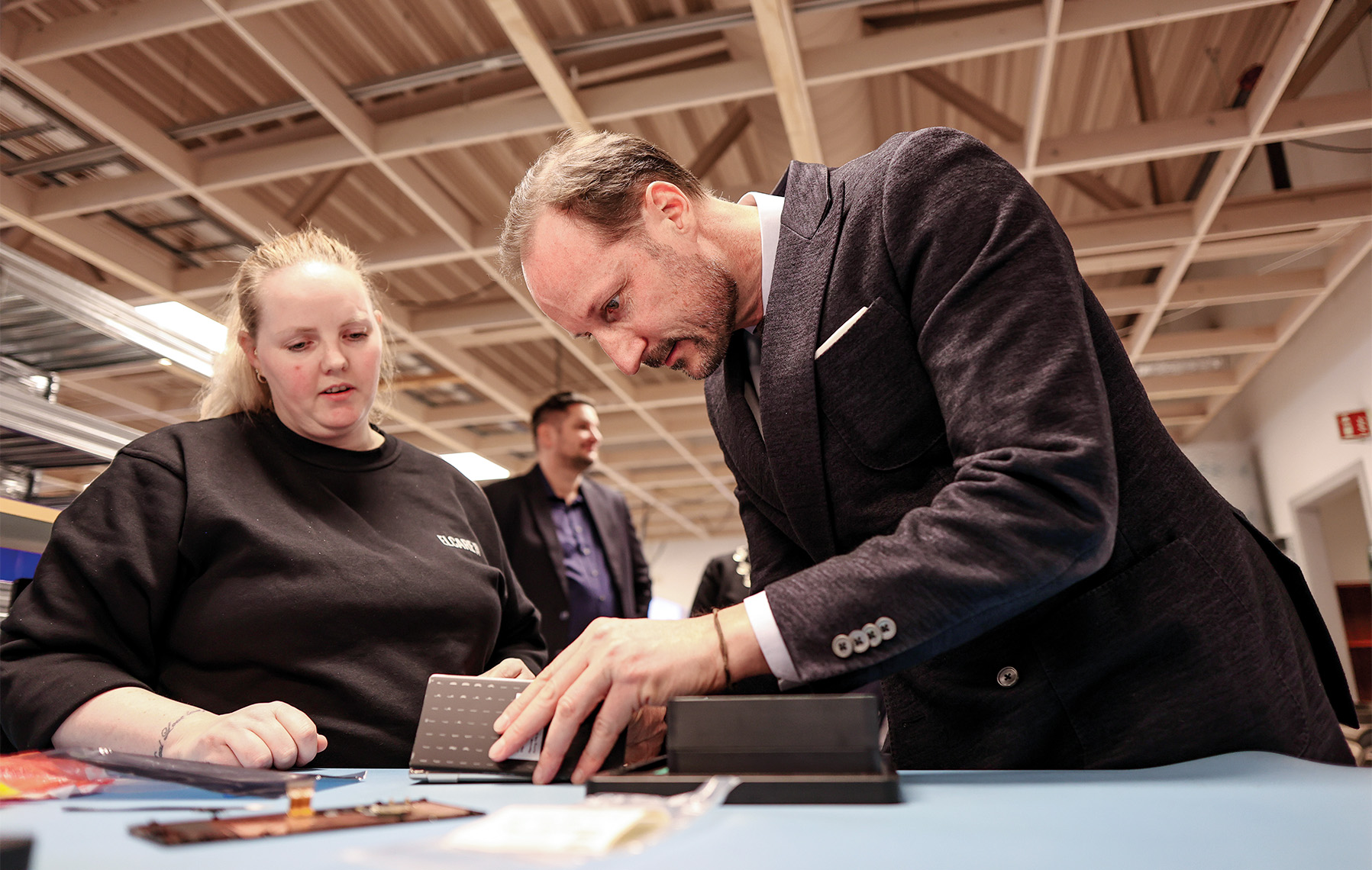
Across the Nordics we continued to lead industry progress through strategic partnerships with industry bodies, research institutions and policymakers - all focused on advancing repair, reuse and responsible consumption. We contributed to industry insight and national research programmes, while working with trade associations to build skills, raise awareness and encourage more sustainable customer behaviours. The importance of repair received high-profile recognition, when Crown Prince Haakon of Norway visited our Elcare repair centre facility in Kongsvinger to see first-hand how defective electronics are restored.
Product packaging
We're prioritising a number of ways to help reduce, recycle and reuse plastics and packaging, and proactively working with suppliers of own label and licensed brand products to remove plastic in packaging. Since launching the initiative in 2019, we’ve decreased plastic packaging by 12% and removed 8.96m items of plastic weighing 348 tonnes. We continuously assess new packaging materials for recyclability. Over 99.9% of our packaging is recyclable, with 78% through normal household collection (based on UK infrastructure). Of the remaining 22%, 76% is expanded polystyrene which is needed to protect the product.
In the UK & Ireland, we provide free packaging recycling when we deliver and unbox large household appliances. We also offer packaging recycling services in the Nordics.
We engage with our suppliers and work with them to explore opportunities to reduce environmental impact by conducting trials to understand the lifecycle impacts of packaging changes. Best practice from previous work means many products are now plastic-free from launch, such as the Sandstrom iPad stylus and Goji Nintendo gaming accessories.
With the implementation of new EU and UK packaging regulations, extended producer responsibility costs are continuing to increase. Additional costs for raw materials, shipping and protecting the product from damage all present challenges to implementing plastic reduction options. To reduce costs and our environmental impact, we are exploring alternative packaging materials that carry lower extended producer costs, while also reviewing and optimising our packaging testing processes to ensure products are adequately protected in transit without increasing packaging volume or shipping requirements.